-25% en todo – hasta el 31 de octubreEnvío gratis en pedidos desde $99
Prime Peptides

Uso del producto: Este producto está destinado exclusivamente a la investigación.

Toda la información de los productos de este sitio web tiene fines exclusivamente educativos. Cualquier forma de introducción en el cuerpo de personas o animales está estrictamente prohibida por la ley. Este producto solo debe ser manipulado por profesionales autorizados y cualificados. No es un medicamento, alimento ni cosmético y no debe etiquetarse, utilizarse ni presentarse como tal.

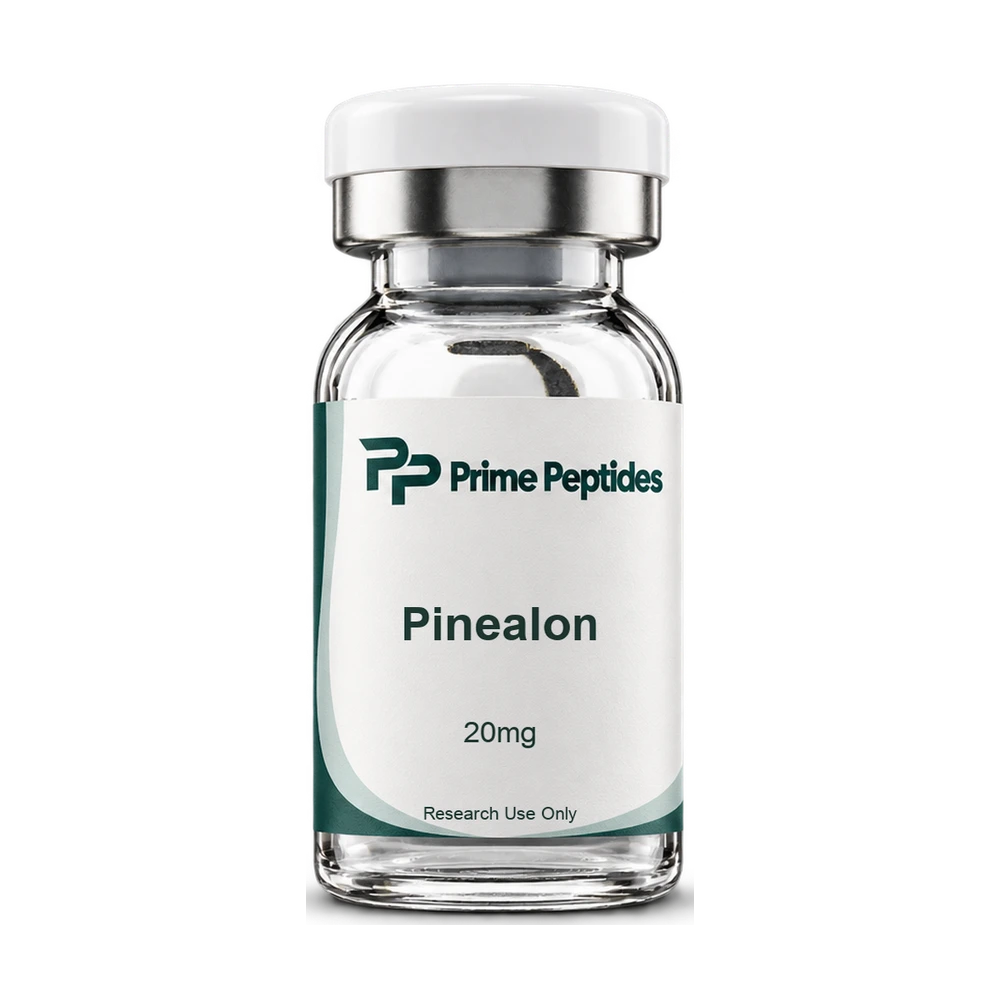
Pinealon, 20mg

Pinealon is a synthetic tripeptide composed of three amino acids, studied for its potential neuroprotective and nootropic properties in research models.

Cantidad
El precio original era: $57.95.El precio actual es: $43.46.
Ver informes publicados
La misma fórmula de confianza. Nuevo diseño.

Durante el cambio de envase, puedes recibir productos con la etiqueta anterior o con la nueva. La formulación, la pureza y la calidad siguen siendo exactamente las mismas, según nuestros estándares.

Métodos de pago aceptados
  • Tarjeta de crédito
  • Transferencia bancaria (SEPA inmediata)
  • Transferencia bancaria (ACH)
  • Wise
  • Revolut
  • Zelle
  • Remitly
  • Western Union
  • Chime
  • Otros

-25% en todo – hasta el 31 de octubre
25% sobre los precios habituales, en sustitución de otras ofertas. Acumulable solo con el descuento crypto.

Envío

Envío en el día para pedidos en EE. UU. realizados antes de las 12:00 EST.

Ver la política de envíos →
Devoluciones

Devoluciones sin complicaciones en 30 días para productos sin abrir.

Ver la política de devoluciones →
Analizado en laboratorio

Cada lote se analiza para comprobar su pureza, potencia y calidad.

Ver resultados de laboratorio →
Atención al cliente

¿Tienes alguna pregunta? Escríbenos por Telegram.

Abrir el chat →

Pinealon is a synthetic tripeptide composed of three amino acids, studied for its potential neuroprotective and nootropic properties in research models. Research interest centers on its proposed role in circadian rhythm regulation, memory retention, and learning process research, alongside investigation of its capacity to support various cell types against hypoxic stress in experimental settings.

Research applications include neuroprotective pathway studies, circadian regulation research, and comparative bioregulatory tripeptide pharmacology.

  • High Purity – 99% Purity Guaranteed
  • Independently Lab Tested
  • Research Grade Quality
  • For Laboratory Research Use Only

3D Molecular Structure

Drag to rotate · scroll to zoom
Loading 3D structure…
Chemical Formula C15H26N6O8
Synonyms Glutamylaspartylarginine, T-33 peptide
Molar Mass 418.407 g/mol
CAS Number 175175-23-2
PubChem CID 18220191
Total Compound Content 20mg per vial
Shelf Life 36 months
Pinealon is studied as a synthetic tripeptide with proposed neuroprotective and nootropic research properties. Research models examine its proposed role in regulating circadian rhythm-associated pathways, with particular research interest in memory retention and learning process endpoints in cognitive research models. Studies have also examined Pinealon's proposed capacity to protect various cell types from hypoxic damage in experimental conditions, alongside research into its potential relevance for offsetting age-related changes within central nervous system tissue models. Independently third-party HPLC-tested; COA available per batch.

Every batch is independently lab tested for identity, purity and potency. View our lab testing program →

What cognitive research models are used to study Pinealon's proposed effects on memory and learning?

Experimental studies commonly utilize in vitro neural network models, organotypic neural tissue cultures, and cellular systems designed to assess neuroplasticity-associated pathways. Endpoints often include changes in synaptic protein expression, neuronal signalling markers, and gene-expression profiles associated with learning and memory processes.

How is Pinealon's proposed hypoxia-related activity investigated in experimental models?

Research frequently employs cell-culture systems exposed to controlled hypoxic or oxygen-glucose deprivation conditions. Common endpoints include cell viability, oxidative stress markers, apoptosis-associated biomarkers, and cellular stress-response pathways. These models allow assessment of concentration-response relationships and characterization of potential mechanisms associated with cellular adaptation to hypoxic stress.

What research models are used to study Pinealon's proposed role in circadian regulation?

Circadian research commonly utilizes cell-based clock-gene reporter systems and tissue-culture models examining expression patterns of core clock genes, including Per, Cry, Bmal1, and Clock. Molecular analyses are used to evaluate changes in circadian-associated signalling pathways and rhythmic gene-expression patterns following experimental exposure.

Customer Reviews (9)

★★★★★ ★★★★★
4.89 / 5
5★
8
4★
1
3★
0
2★
0
1★
0
★★★★★ ★★★★★
Verified Buyer
Anonymous

Arrived without a hiccup in a reasonable timeframe. A lot cheaper than from a pharmacist. Seems to do the job as I’m more alert and able to focus for longer without feeling tired or sleepy.

★★★★★ ★★★★★
Verified Buyer
Filiberto

Always potent always received 100% quality. .

★★★★★ ★★★★★
Verified Buyer
Marisa

Received package quickly..very impressed, especially with the quality of the product. Will definitely continue ordering.

★★★★★ ★★★★★
Verified Buyer
Marc

This was a very easy website for me to use. Great communication through emails and quick shipping!

★★★★★ ★★★★★
Verified Buyer
Jerry

Very satisfied with my purchase. The product arrived on time and in perfect condition.